Trends, Market Insights, and Business Advantages
Saffron—often referred to as “red gold”—is one of the most valuable spices on Earth, prized for its color, aroma, flavor, and medicinal properties. For businesses, sourcing saffron through a wholesale supplier unlocks scalable growth opportunities across food, nutraceuticals, cosmetics, and luxury retail segments. In this comprehensive article, we explore the wholesale saffron market, key trends, pricing dynamics, quality standards, supplier selection strategies, and future forecasting.
Market Overview: Why Wholesale Saffron Matters
Wholesale saffron supply remains central to the global spice trade and premium product manufacturing. While saffron is expensive on a per-gram basis due to labor-intensive harvesting, bulk sourcing dramatically improves cost efficiency and supply reliability for businesses.
Saffron—often referred to as “red gold”—is one of the most valuable spices on Earth, prized for its color, aroma, flavor, and medicinal properties.Wholesale saffron suppliers specialize in large-volume, B2B saffron products tailored to the needs of international and regional customers.Selecting the right wholesale saffron supplier is a strategic decision that affects product quality, legal compliance, customer satisfaction, |
According to industry estimates, the global saffron market size exceeded USD 1 billion in recent years and is projected to maintain a strong compound annual growth rate (CAGR) through the end of the decade. Plant In
Key Wholesale Market Drivers:
-
Rising demand in gourmet cuisine, high-end restaurants, and specialty food manufacturers
-
Increased B2B channel sales—estimated to hold around 60 % of total saffron distribution due to its ability to support bulk transactions efficiently for food, cosmetics, and pharmaceutical clients Persistence Market Research
-
Growing interest in certified organic and traceable supply chains by European and North American buyers Global Market Statistics
What Wholesale Saffron Suppliers Offer
Wholesale saffron suppliers specialize in large-volume, B2B saffron products tailored to the needs of international and regional customers. Most suppliers provide:
Bulk Threads (Whole Stigmas)
High-grade saffron threads are the premium form of the spice, ideal for culinary and luxury usage. These typically meet ISO 3632 quality standards and are available in quantities starting around 100 g up to multiple kilograms. Deluxe Saffraan
Saffron Powder
Finely milled saffron powder is designed for food manufacturers, extract producers, and nutraceutical companies that require even distribution of saffron properties in finished goods. Powder batches may be certified by lab testing for potency, crocin levels, and moisture content. Plant In
Private Label & Custom Packaging
Many suppliers offer private label solutions and customized packaging to help brands differentiate themselves in competitive markets. This includes premium display jars, vacuum-sealed bulk containers, or export-ready cartons. Nutrada
Organic and Certified Saffron
Organic saffron—cultivated without synthetic inputs—is increasingly demanded by conscious consumers. Wholesale suppliers often provide USDA, EU ORGANIC, or similar certifications to support premium pricing and compliance. Global Market Statistics
Regional Supply and Global Distribution
The saffron supply chain is global but highly concentrated in a few key producer regions:
🇮🇷 Iran – The Dominant Producer
Iran remains the world’s largest saffron supplier, accounting for the vast majority of global output and exports. Many wholesale suppliers source directly from Iranian producers to ensure continuous bulk availability. Nutrada
🇪🇸 Spain, 🇮🇳 India, and Other Origins
Spain and India also contribute high-quality grades (like Super Negin and Sargol), often preferred by premium markets. Wholesale distributors leverage relationships across these regions to balance cost, quality, and logistics. Europages
Global Distribution Networks
Wholesale suppliers use robust logistics—including air and sea freight—to deliver saffron to Europe, North America, the Middle East, and Asia. Reliable partners will often include certification support and customs documentation for import compliance. Alibaba
Pricing Trends: What Wholesale Buyers Should Know
Saffron pricing is influenced by quality, grade, region of origin, and supply chain factors.
Price Volatility
Wholesale saffron prices can shift due to weather conditions, geopolitical events, and crop yields. Historical data has shown year-over-year increases of 5–7 % in saffron pricing, reflecting global demand and limited supply dynamics. Wholesale of saffron
Bulk Pricing Advantages
Buying saffron in larger quantities dramatically lowers per-unit costs compared to retail packaging. Most B2B transactions involve weights starting from 100 g upwards, with flexible MOQ (minimum order quantities) depending on supplier terms. Plant In
Quality vs. Cost
High-grade saffron—like Super Negin and Sargol—commands premium pricing but also offers better color strength, aroma, and crocin content, which are crucial for luxury and gastronomic use. Deluxe Saffraan
Quality Assurance & Specialized Industry Terms
For businesses sourcing saffron wholesale, understanding jargon and quality metrics is essential:
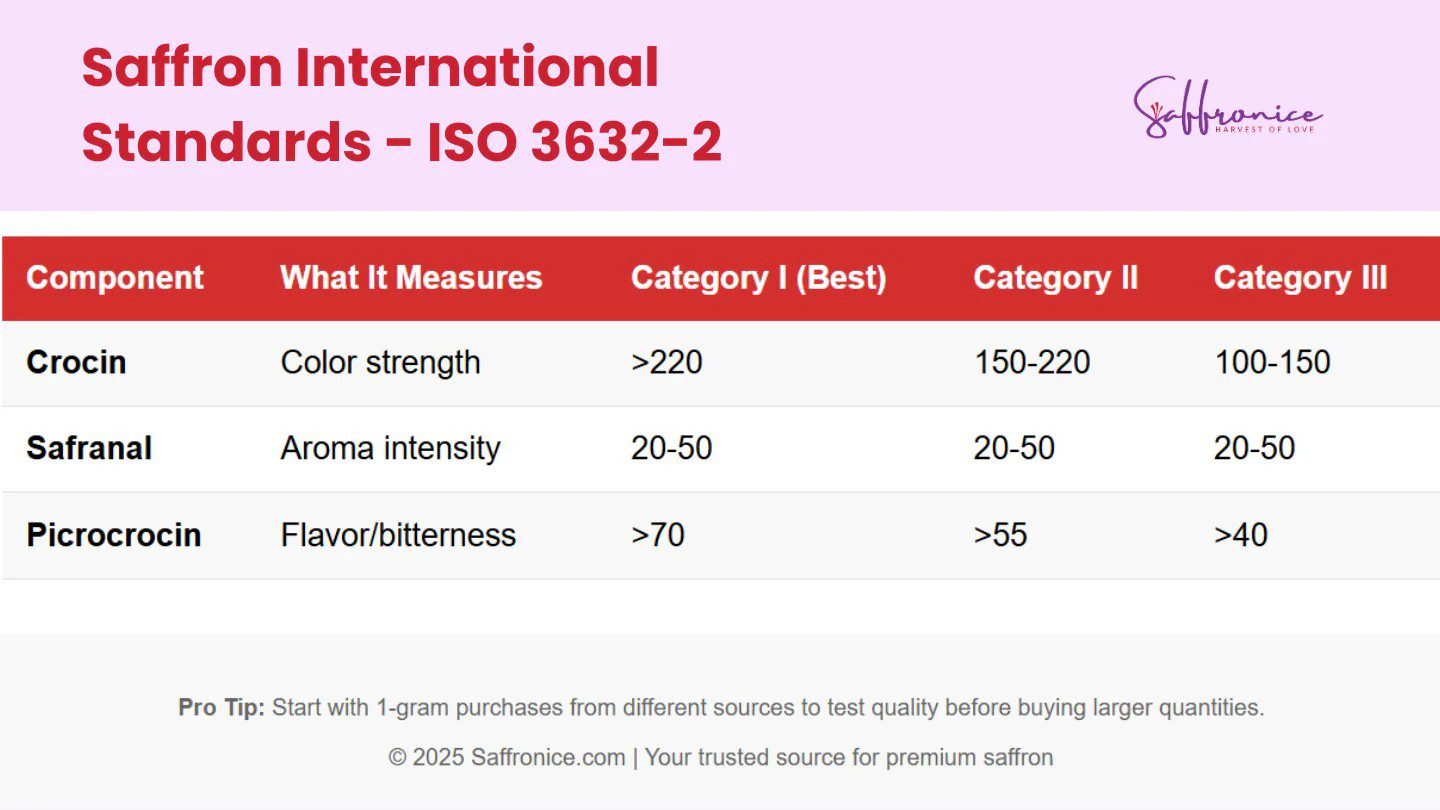
ISO 3632 Certification
This international standard measures saffron quality based on color strength (crocin), aroma (safranal), and flavor (picrocrocin). Higher numbers generally indicate superior potency.
Grades: Super Negin, Sargol, Pushal
-
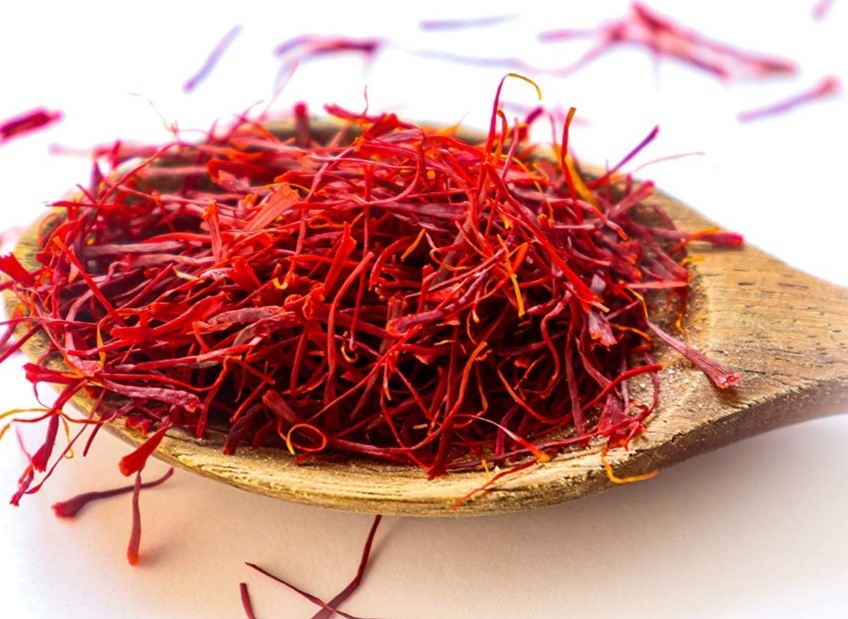
Super Negin: Top grade with long, deep red stigmas—highest aroma and color impact
-
Sargol: Slightly less intense but still premium quality
-
Pushal: Includes some yellow parts, more competitive pricing
These grades influence both pricing and end-use decisions for chefs, manufacturers, and retailers. Europages
Traceability Metrics
Forward-thinking suppliers now track saffron batches using digital traceability systems (sometimes blockchain) to verify origin, processing, and compliance, appealing to quality-focused B2B buyers. Global Market Statistics
Supplier Selection: What Businesses Should Look For
Selecting the right wholesale saffron supplier is a strategic decision that affects product quality, legal compliance, customer satisfaction, and long-term costs.
✔ Proven Reliability
Industry leaders maintain ISO quality certifications, provide transparent lab test results, and have established logistics capabilities for international delivery. Europages
✔ Supply Chain Transparency
Trustworthy suppliers will offer batch traceability, origin documentation, and compliance certificates suitable for food safety regulations in target markets like the EU or US.
✔ Flexible Packaging & MOQ
Wholesale suppliers that can adjust packaging sizes—from bulk containers to 1–5 kg export pallets—offer greater commercial flexibility. Nutrada
✔ Customer-centric Support
Top suppliers provide dedicated account management, sample products before purchase, and responsive sales assistance for contract negotiation and shipping details. Deluxe Saffraan
“In the saffron trade, trust and transparency are as valuable as the spice itself. Knowing the exact origin and quality metrics enables buyers to make informed, risk-mitigated decisions.”
Future Outlook: Trends That Will Shape Wholesale Saffron
The wholesale saffron industry is evolving with several strategic trends:
Sustainability & Organic Demand
Certified organic saffron is increasingly preferred by food manufacturers and wellness brands, reflecting broader consumer preference for clean, responsibly sourced ingredients. Global Market Statistics
E-commerce and Digital B2B Marketplaces
Online platforms, including Alibaba and specialized supply networks, make it easier for small-to-medium enterprises to access bulk saffron directly from producers. Plant In
Expanded Applications
Beyond culinary use, saffron is gaining traction in cosmetics, nutraceuticals, and functional beverages, creating multiple demand pathways for wholesale suppliers to tap into. Global Market Statistics
Conclusion: Commercial Value of Wholesale Saffron Sourcing
Choosing the right wholesale saffron supplier isn’t just about price—it’s about securing consistent quality, scalable volume, and supply chain visibility. The current market, valued at over USD 1 billion and growing, rewards businesses that:
-
Understand grade differentiation and ISO certification standards
-
Strategically leverage bulk pricing advantages
-
Partner with transparent, responsive suppliers
-
Embrace sustainability and traceability
With global consumer demand rising in gourmet food, wellness, and natural products, saffron remains a commercially attractive and strategically important ingredient for businesses worldwide. Persistence Market Research