Market Growth, Health Benefits, and Commercial Opportunities
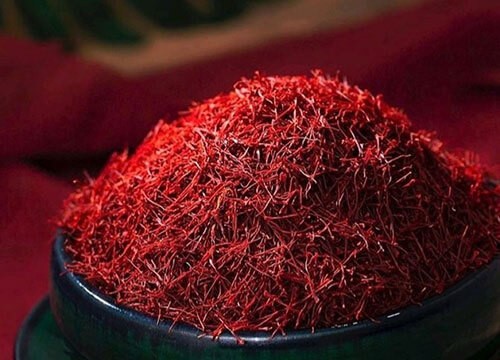
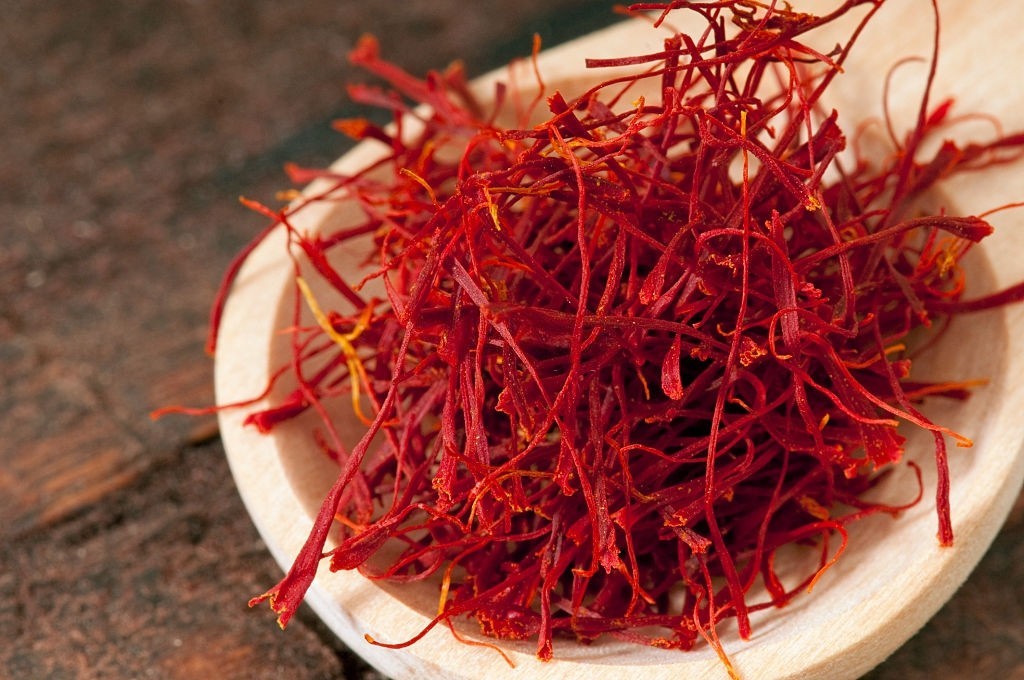
Saffron (Crocus sativus L.), often called “red gold,” has evolved from a luxury culinary spice into a high-value wellness ingredient supported by scientific research and growing consumer demand for natural health solutions. Today, saffron for wellness is one of the fastest-growing botanical segments in the nutraceutical and functional food industries.
The Rise of Saffron in the Global Wellness Market
The global wellness industry, valued at over USD 5.6 trillion, continues to grow rapidly according to the Global Wellness Institute
https://globalwellnessinstitute.org/industry-research/
Saffron (Crocus sativus L.), often called “red gold,” has evolved from a luxury culinary spice into a high-value wellness ingredient supported by scientific research and growing consumer demand for natural health solutions.Saffron is best known in wellness for its effects on mood, stress, and emotional balance.Clinical research suggests saffron may help reduce appetite and emotional eating, supporting weight-management goals. |
Within this massive market, plant-based and functional ingredients such as saffron are gaining momentum. According to Research and Markets, the global saffron market exceeded USD 1 billion and is forecast to grow at a CAGR of 7–9%, driven largely by wellness, supplements, and functional health products.
https://www.researchandmarkets.com/reports/6190331/saffron-market-overview
“Saffron is transitioning from a traditional spice into a scientifically supported wellness ingredient with global commercial relevance.”
— Research and Markets
This shift has positioned saffron as a premium botanical across mental health, women’s wellness, antioxidant support, and preventive care.
Why Saffron Is Valuable for Wellness Applications
 Bioactive Compounds That Drive Wellness
Saffron’s wellness value comes from its unique phytochemical profile:
-
Crocin – a carotenoid responsible for antioxidant and neuroprotective effects
-
Safranal – linked to mood enhancement and stress modulation
-
Picrocrocin – associated with digestive and appetite-related functions
These compounds are widely documented in peer-reviewed research hosted by PubMed
https://pubmed.ncbi.nlm.nih.gov/?term=saffron+health+benefits
Scientifically Supported Health Benefits of Saffron
Mental Health & Emotional Wellness
Saffron is best known in wellness for its effects on mood, stress, and emotional balance. Multiple clinical trials published in journals such as Phytotherapy Research show saffron may support mild to moderate mood disorders.
A meta-analysis indexed by PubMed highlights saffron’s comparable performance to conventional mood-support compounds with fewer side effects:
https://pubmed.ncbi.nlm.nih.gov/31274842/
“Saffron extract demonstrated significant positive effects on mood regulation in controlled clinical trials.”
— PubMed Clinical Review
This has led to increased use of saffron in stress-relief supplements, mood capsules, and functional beverages.
Women’s Wellness & Hormonal Balance
Saffron is increasingly incorporated into women’s wellness products, particularly for:
-
PMS support
-
Emotional balance
-
Hormonal cycle comfort
According to the National Center for Biotechnology Information (NCBI), saffron’s anti-inflammatory and neuroactive properties contribute to its growing use in female health formulations.
https://www.ncbi.nlm.nih.gov/pmc/articles/PMC5452224/
Antioxidant & Anti-Inflammatory Support
Saffron’s high antioxidant capacity helps combat oxidative stress, a major contributor to aging and chronic disease. The National Institutes of Health (NIH) recognizes antioxidants like crocin as essential for long-term wellness.
https://ods.od.nih.gov/factsheets/Antioxidants-HealthProfessional/
This supports saffron’s inclusion in:
-
Anti-aging supplements
-
Cellular health products
-
Immune support formulas
Weight Management & Metabolic Health
Clinical research suggests saffron may help reduce appetite and emotional eating, supporting weight-management goals. A study published in Nutrition Research showed reduced snacking behavior among participants using saffron extract.
https://pubmed.ncbi.nlm.nih.gov/21569803/
This has increased its use in natural metabolic health supplements.
Commercial Applications of Saffron in Wellness Products
Nutraceuticals & Dietary Supplements
The largest commercial demand comes from nutraceutical manufacturers, offering:
-
Standardized saffron extract capsules
-
Mood and sleep support blends
-
Combination formulas with magnesium or ashwagandha
According to Grand View Research, supplements remain the fastest-growing saffron application segment.
https://www.grandviewresearch.com/industry-analysis/saffron-market
Functional Foods & Wellness Beverages
Saffron is increasingly used in:
-
Herbal teas
-
Functional drinks
-
Wellness shots
-
Fortified honey
This aligns with consumer demand for daily wellness rituals, as reported by Euromonitor.
https://www.euromonitor.com/health-and-wellness
Cosmetics & Nutricosmetics
Luxury skincare and nutricosmetic brands use saffron for its:
-
Skin-brightening properties
-
Anti-aging benefits
-
Anti-inflammatory action
According to Cosmetics Europe, botanical ingredients like saffron are key drivers of premium beauty growth.
https://cosmeticseurope.eu/
Quality Standards & Specialized Industry Terms
ISO 3632 Saffron Quality Standard
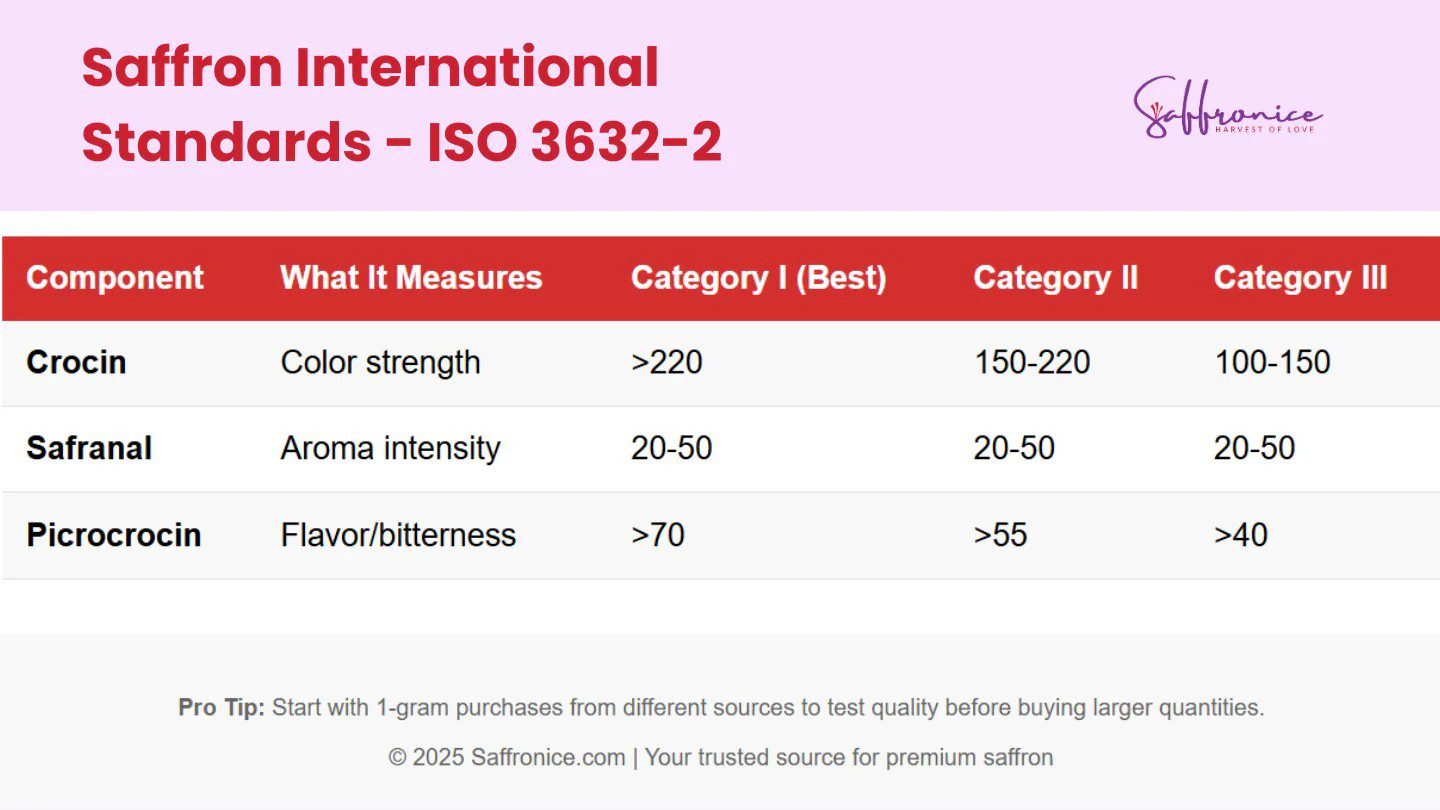
ISO 3632 measures saffron quality based on:
-
Crocin (color strength)
-
Safranal (aroma)
-
Picrocrocin (flavor)
Details on ISO spice standards are available from the International Organization for Standardization
https://www.iso.org/standard/44523.html
Extract Standardization
Wellness brands prefer standardized saffron extracts, ensuring consistent crocin content and therapeutic reliability across batches—critical for supplements and clinical positioning.
Organic & Traceable Saffron
Certified organic saffron (EU Organic / USDA Organic) is increasingly demanded by wellness consumers seeking clean-label products. Market data from Global Market Statistics confirms organic saffron’s premium growth trend.
https://www.globalmarketstatistics.com/market-reports/saffron-market-13478
Market Trends Driving Saffron for Wellness
Clean-Label & Plant-Based Movement
Consumers are actively avoiding synthetic ingredients, fueling demand for plant-based wellness solutions, according to Mintel.
https://www.mintel.com/consumer-market-news/health-and-wellness
Premiumization of Wellness Products
Saffron’s rarity and labor-intensive harvesting support premium pricing strategies, especially in luxury supplements and personalized nutrition.
Digital & E-Commerce Expansion
Direct-to-consumer wellness brands and online marketplaces have expanded global access to saffron-based products.
https://www.statista.com/topics/8219/health-and-wellness-e-commerce/
Challenges in the Saffron Wellness Market
Adulteration Risks
Due to high value, saffron faces adulteration risks. Industry reports estimate up to 30% of saffron globally may be adulterated, emphasizing the importance of lab testing and traceability.
https://www.sciencedirect.com/science/article/pii/S0308814619311180
Future Outlook: Saffron as a Core Wellness Ingredient
As scientific validation and consumer awareness increase, saffron is expected to become a core ingredient in mental wellness, preventive health, and functional nutrition.
“Saffron sits at the intersection of tradition, clinical science, and premium wellness branding.”
— Grand View Research
https://www.grandviewresearch.com/industry-analysis/saffron-market
Conclusion: Why Saffron Is a Strategic Wellness Investment
Saffron for wellness is no longer niche—it is a science-backed, premium, and fast-growing market segment. For wellness brands, supplement companies, and health investors, saffron offers:
-
Strong differentiation
-
High consumer trust
-
Premium margins
-
Alignment with clean-label trends
As the wellness economy expands, saffron stands out as a timeless botanical with modern commercial power.