Growth Drivers, Industry Insights, and Future Outlook
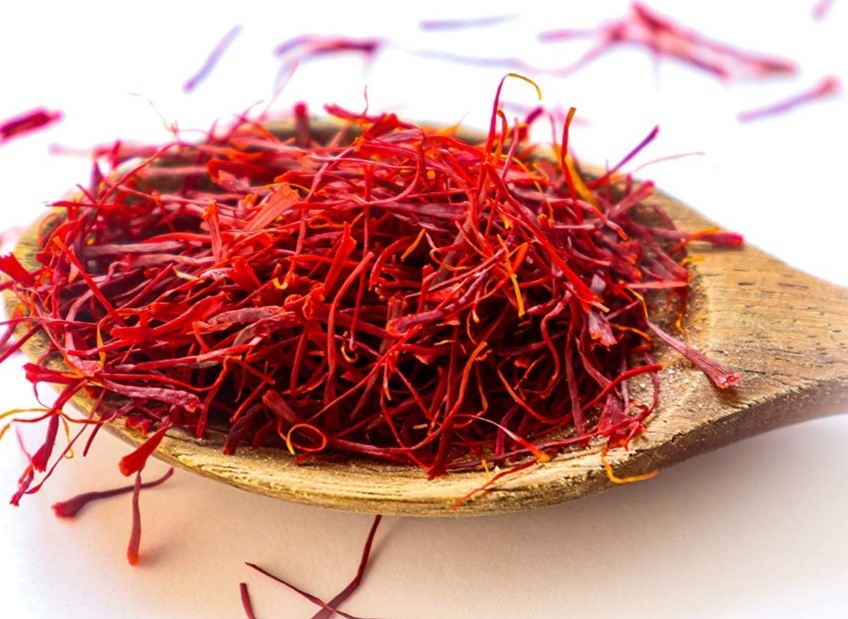
The global saffron market is undergoing a remarkable transformation. Traditionally valued as a luxury culinary spice, saffron is now emerging as a high-value ingredient across multiple industries, including cosmetics, pharmaceuticals, nutraceuticals, and functional foods. As consumer preferences shift toward natural, premium, and health-enhancing products, saffron’s commercial relevance continues to expand.
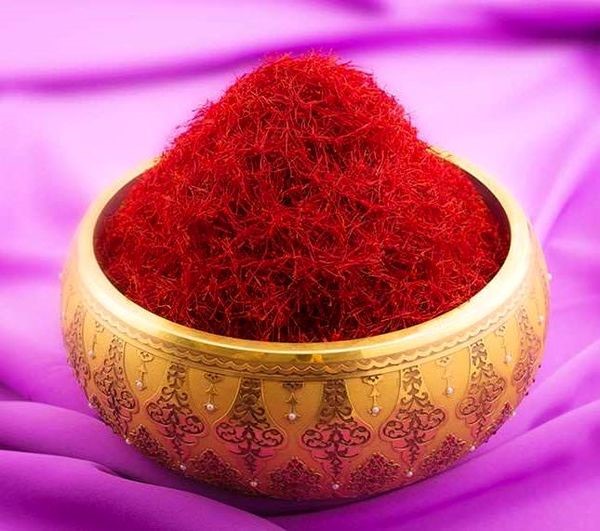
Consequently, understanding saffron market trends has become essential for investors, producers, exporters, and brand owners seeking long-term growth opportunities.
Global Saffron Market Size and Growth Outlook
Strong and Consistent Market Expansion
To begin with, market research data clearly indicates steady growth. According to Grand View Research, the global saffron market was valued at approximately USD 602 million in 2023 and is projected to reach USD 959.38 million by 2030, growing at a CAGR of 7.1%.
Source: https://www.grandviewresearch.com/industry-analysis/saffron-market
Meanwhile, Business Research Insights forecasts even stronger long-term momentum, estimating that the market could approach USD 2.8 billion by 2035, driven by rising cross-industry demand.
Source: https://www.businessresearchinsights.com/market-reports/saffron-market-107546
As a result, saffron is no longer viewed solely as a niche spice but rather as a strategic agricultural commodity with premium positioning.
“The saffron market is evolving from traditional consumption toward diversified, high-margin applications.”
— Global Market Analysts
Key Drivers Shaping Saffron Market Trends
Rising Demand for Natural and Functional Ingredients
First and foremost, growing health awareness is a major catalyst. Consumers increasingly prefer plant-based, functional ingredients with proven health benefits. Because saffron contains bioactive compounds such as crocin, crocetin, and safranal, it is widely used in supplements aimed at mood enhancement, antioxidant protection, and cognitive health.
According to GlobeNewswire, the functional food and nutraceutical segment is one of the fastest-growing applications for saffron.
Source: https://www.globenewswire.com
Consequently, saffron is being repositioned as a wellness ingredient, not just a flavoring agent.
Expansion in Cosmetics and Personal Care Industry
In addition, the cosmetics sector is playing a crucial role in market expansion. Saffron is now widely incorporated into anti-aging creams, brightening serums, and luxury facial formulations.
Because consumers are actively avoiding synthetic chemicals, cosmetic brands are investing in clean-label botanical actives, including saffron.
Source: https://www.imarcgroup.com/saffron-market
As a result, saffron commands premium pricing in skincare formulations, significantly improving profit margins for manufacturers.
Clean-Label and Gourmet Food Trends
Similarly, the global clean-label movement has boosted demand for saffron as a natural coloring and flavoring agent. Unlike artificial additives, saffron aligns with regulatory and consumer expectations for transparency.
Moreover, gourmet and fine-dining trends—especially in North America and Europe—continue to fuel consumption. Therefore, food manufacturers increasingly incorporate saffron into premium sauces, ready-to-eat meals, and specialty beverages.
Market Segmentation Analysis
Segmentation by Product Form
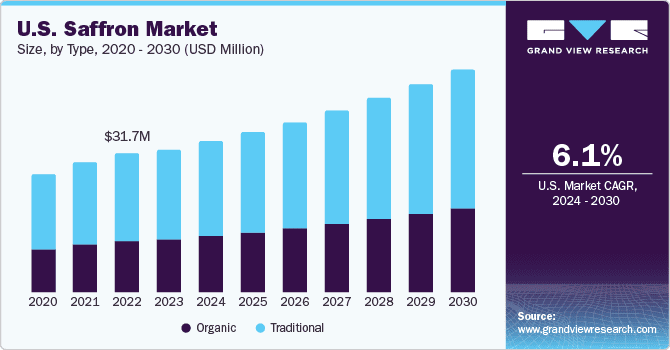
From a segmentation perspective, saffron is sold in thread, powder, and liquid extract forms.
Notably, saffron threads dominate the market, as consumers associate them with authenticity and higher quality.
Source: https://www.imarcgroup.com/saffron-market
However, powdered saffron is gaining traction in industrial food processing and cosmetics, where standardization and scalability are essential.
Quality Grades and Certification
Furthermore, saffron is classified by ISO 3632 standards, with Grade I saffron representing the highest concentration of active compounds.
As consumers become more educated, demand for certified, lab-tested saffron continues to increase. Consequently, brands emphasizing traceability and quality assurance are gaining a competitive edge.
Regional Saffron Market Trends
Asia-Pacific and Middle East Leadership
Historically, Iran, India, and Afghanistan have dominated saffron production. At the same time, Asia-Pacific remains a major consumption hub due to traditional culinary and medicinal use.
Meanwhile, the Middle East and North Africa maintain strong demand, particularly for cultural, ceremonial, and hospitality uses.
Source: https://www.grandviewresearch.com/industry-analysis/saffron-market
Rapid Growth in North America and Europe
In contrast, North America and Europe are experiencing demand growth driven by gourmet food culture, wellness products, and luxury cosmetics.
As e-commerce expands, consumers now have direct access to premium saffron, further accelerating market penetration.
Source: https://www.persistencemarketresearch.com
Distribution Channels and Trade Dynamics
B2B Trade and Digital Expansion
Traditionally, saffron trade relied heavily on B2B bulk transactions. However, digital platforms are reshaping distribution models.
For example, online specialty retailers and D2C brands are enabling producers to access global customers without intermediaries. Consequently, profit margins and brand control have improved.
Additionally, blockchain-based traceability solutions are being adopted to reduce fraud and enhance buyer confidence.
Source: https://www.globenewswire.com
Emerging Trends and Innovations
Sustainability and Ethical Sourcing
Sustainability has become a decisive purchasing factor. As a result, organic and ethically sourced saffron now commands higher prices.
Moreover, certifications and transparent farming practices are helping brands differentiate themselves in competitive markets.
Source: https://www.gcimagazine.com
Technological Innovation in Cultivation
Due to climate change, traditional saffron-growing regions face yield instability. Therefore, producers are exploring controlled-environment agriculture (CEA) and indoor farming systems.
For instance, growers in Kashmir have begun experimenting with indoor cultivation to stabilize production.
Source: https://www.reuters.com
Market Challenges and Constraints
High Production Costs
Despite strong demand, saffron remains labor-intensive. In fact, it takes over 150,000 flowers to produce one kilogram of saffron, which significantly limits scalability.
As a result, pricing volatility remains a major market challenge.
Source: https://www.irandriedfruit.com
Adulteration and Quality Risks
Additionally, saffron adulteration continues to threaten market credibility. Reports suggest that 20–30% of saffron in global trade may be adulterated.
Therefore, investment in authentication technologies and certification is no longer optional—it is essential.
Source: https://www.businessresearchinsights.com
Future Outlook and Strategic Opportunities
Looking ahead, the saffron market is poised for sustained premium growth. Companies that invest in:
-
Functional product development
-
Certified quality standards
-
Sustainable sourcing
-
Digital distribution
will be best positioned for success.
“The future of the saffron market lies in innovation, traceability, and premium positioning.”
Key Industry Resources
-
Grand View Research – https://www.grandviewresearch.com
-
IMARC Group – https://www.imarcgroup.com
-
Business Research Insights – https://www.businessresearchinsights.com
-
Global Market Statistics – https://www.irandriedfruit.com
-
GlobeNewswire – https://www.globenewswire.com