From Flower to Premium Red Gold
A professional saffron production line ensures that every thread maintains its purity, aroma, and vibrant color. Because saffron is one of the world’s most valuable spices, precision and care are essential at every stage. From harvesting the delicate flowers of the Crocus sativus to final packaging, a modern production line protects quality and maximizes efficiency.
Today, leading producers combine traditional expertise with advanced processing technology. As a result, they deliver premium saffron that meets international quality standards. If you want consistent, export-grade saffron, understanding the saffron production line is crucial.
Key Stages of the Saffron Production Line
1. Cultivation and Harvesting
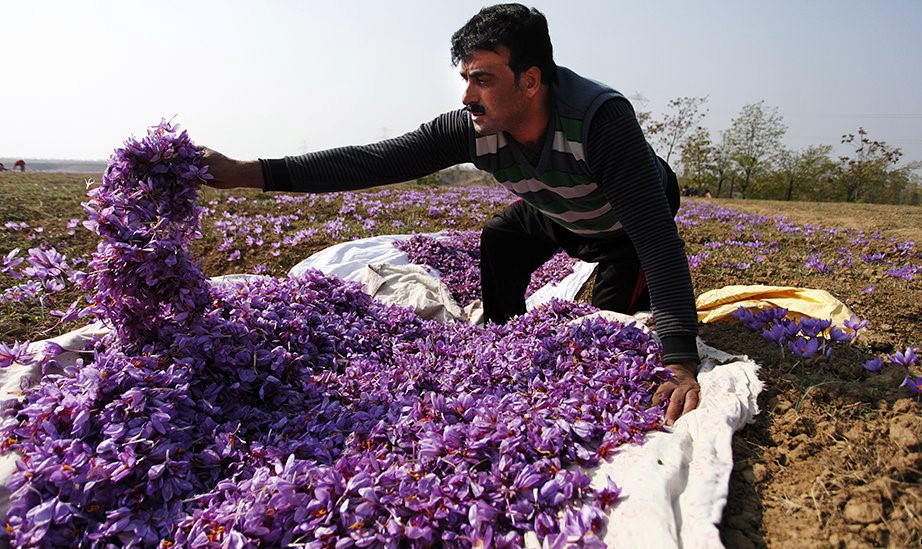
First of all, saffron production begins in carefully selected fields. Regions such as Khorasan Province provide ideal climate conditions, including hot summers and cold winters. Because climate directly affects crocin levels, proper cultivation increases color strength and aroma.
During the short autumn harvest season, skilled workers handpick each flower early in the morning. This method protects the delicate stigmas from sunlight damage. Consequently, the production line starts with the highest-quality raw material.
2. Stigma Separation Process
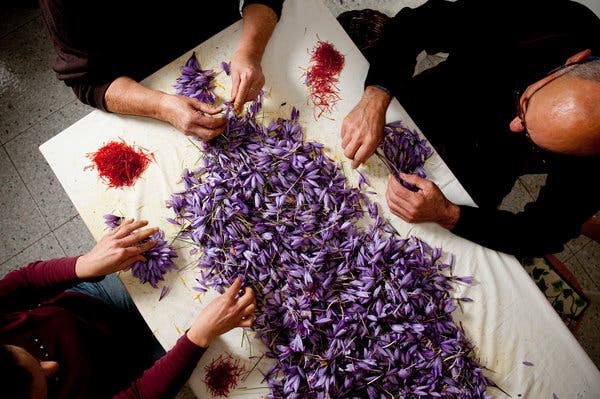
Next, trained workers separate the red stigmas from the flower petals. Since each blossom contains only three threads, this step requires speed and precision. Therefore, many facilities use hygienic stainless-steel tables and controlled environments to maintain cleanliness.
In addition, quality inspectors remove yellow or damaged parts immediately. This careful selection guarantees pure saffron threads with strong coloring power.
3. Drying and Dehydration
Drying plays a critical role in the saffron production line. If producers dry saffron correctly, they preserve aroma and prevent mold growth. Modern facilities use controlled dehydration chambers to maintain stable temperature and humidity levels.
As a result, the threads retain their deep red color and intense fragrance. Proper drying also increases shelf life, which is essential for global export.
Quality Control and Grading
Laboratory Testing and Certification
Not only does a professional saffron production line focus on processing, but it also emphasizes strict quality control. Laboratories test saffron for crocin (color), safranal (aroma), and picrocrocin (flavor). Therefore, buyers receive verified Grade A products.
Countries such as Iran lead global saffron production, and many exporters follow international ISO standards. Because certification builds trust, it strengthens brand reputation in competitive markets.
Sorting and Packaging
After grading, machines or trained staff sort saffron threads by size and quality. Then, producers package the threads in airtight containers to protect them from moisture and light.
At this stage, branding and labeling also become important. Attractive packaging not only preserves freshness but also increases commercial value. Consequently, businesses that invest in premium packaging often achieve higher market prices.
Benefits of a Modern Saffron Production Line
Higher Efficiency and Consistency
A structured saffron production line reduces waste and improves productivity. In addition, automation ensures consistent drying and packaging standards. As a result, suppliers can meet large-scale demand without compromising quality.
Increased Export Opportunities
Because global demand for saffron continues to grow, professional production systems create strong export opportunities. Buyers in Europe, Asia, and the Middle East prioritize traceability and quality assurance. Therefore, advanced production lines help companies expand internationally.
Invest in Quality and Innovation
In conclusion, a well-managed saffron production line transforms delicate flowers into premium red gold. By combining traditional harvesting with modern processing, producers ensure purity, potency, and commercial success.
If you want to compete in the global saffron market, invest in a professional production line. Quality control, advanced drying systems, and premium packaging will position your brand for long-term growth and profitability.