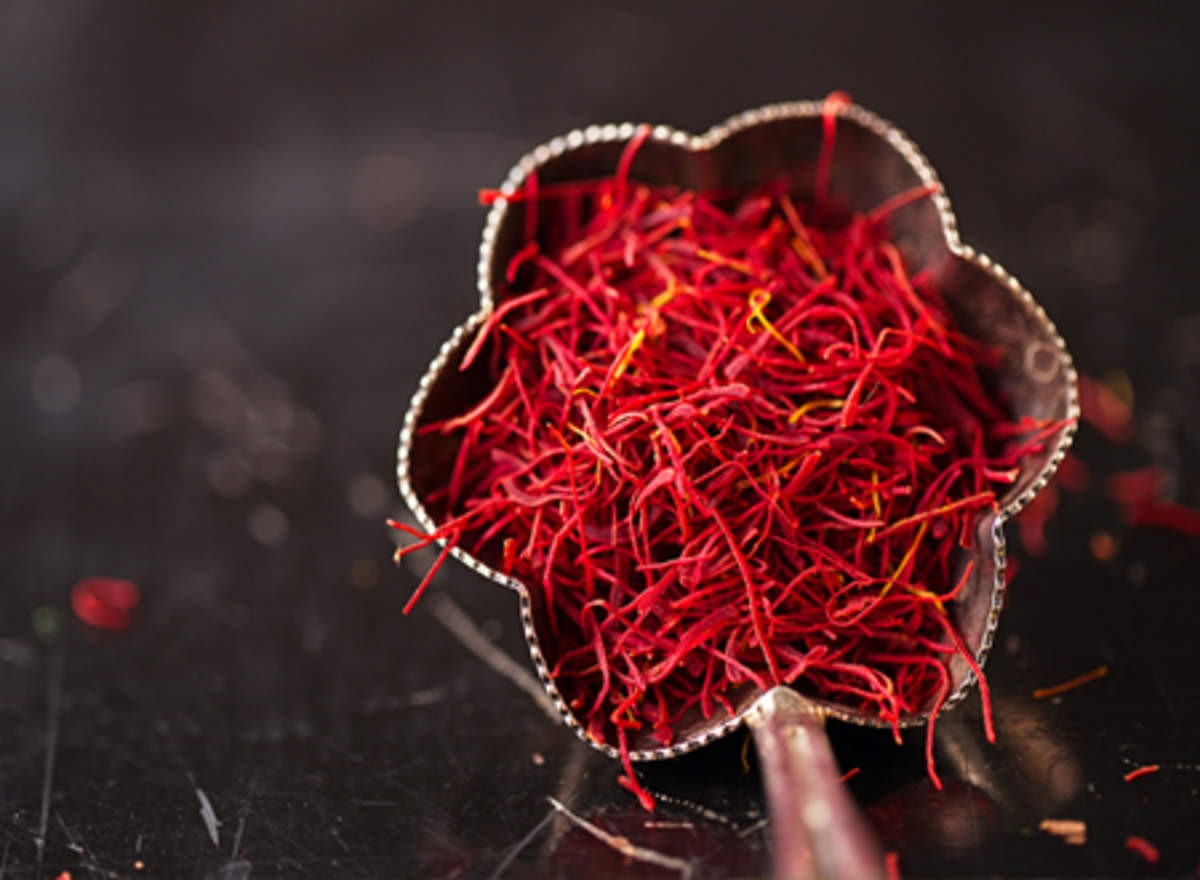


The saffron crocus is the only crocus that can produce the saffron spice.


Saffron Crocus (Crocus sativus)
Saffron crocus (Crocus sativus L.) is a flowering plant belonging to the iris family (Iridaceae) and is the source of the world’s most expensive spice: saffron. The spice is produced from the three red stigmas found inside each flower.
Botanical Information
| Feature | Description |
|---|---|
| Scientific name | Crocus sativus L. |
| Family | Iridaceae |
| Plant type | Perennial herb |
| Propagation | Corms (not seeds) |
| Flower color | Purple/lilac |
| Harvest part | Red stigmas |
| Flowering season | Autumn (October–November in many regions) |
| Life cycle | Several years in suitable conditions |
Origin and History
Saffron crocus has been cultivated for thousands of years. Historical evidence links saffron cultivation to ancient civilizations in the Mediterranean, Persia, and Central Asia. Today, Iran is the world’s largest producer of saffron, with major cultivation concentrated in the Khorasan region.
Growing Conditions
Climate
Saffron crocus prefers:
- Hot, dry summers
- Cold winters
- Full sunlight
- Low humidity during dormancy
Soil
Ideal soil:
- Well-drained sandy loam
- Rich in organic matter
- pH approximately 6–8
- Free from waterlogging
Planting Saffron Corms
Saffron is planted using corms, which are underground storage organs.
Recommended conditions:
| Parameter | Recommendation |
|---|---|
| Planting time | June–September |
| Depth | 10–15 cm |
| Corm spacing | 10–15 cm |
| Sunlight | Full sun |
| Soil drainage | Excellent |
Large, healthy corms produce more flowers and higher saffron yields.
Flower and Saffron Production
Each saffron crocus flower contains:
- 6 purple petals
- 3 yellow stamens
- 3 red stigmas (the saffron spice)
Because each flower produces only a tiny amount of saffron, harvesting is extremely labor-intensive.
Approximately:
- 150,000–200,000 flowers may be required to produce 1 kg of dried saffron.
Harvesting Process
- Flowers are picked by hand early in the morning.
- Red stigmas are separated carefully.
- Stigmas are dried under controlled conditions.
- Finished saffron is stored away from light and moisture.
Major Saffron-Producing Regions
| Country | Famous Regions |
|---|---|
| Iran | Khorasan (Torbat Heydarieh, Qaen) |
| India | Kashmir (Pampore) |
| Spain | La Mancha |
| Afghanistan | Herat |
| Greece | Kozani |
| Morocco | Taliouine |
Saffron Quality Factors
High-quality saffron is evaluated by:
- Crocin → coloring strength
- Safranal → aroma
- Picrocrocin → flavor
- Moisture content
- Purity and absence of additives
Premium grades include:
- Super Negin
- Negin
- Sargol
- Pushal
Uses of Saffron
Culinary
- Rice dishes
- Desserts
- Tea and beverages
- Sauces
- Bakery products
Traditional and Industrial Uses
- Natural coloring
- Fragrance products
- Cosmetics
- Research into potential health applications
Conclusion
Saffron Crocus (Crocus sativus) is a unique and valuable crop because of its delicate flowers, manual harvesting requirements, and exceptional spice quality. With proper soil, climate, and cultivation practices, it can remain productive for several years and produce premium saffron for domestic and international markets.